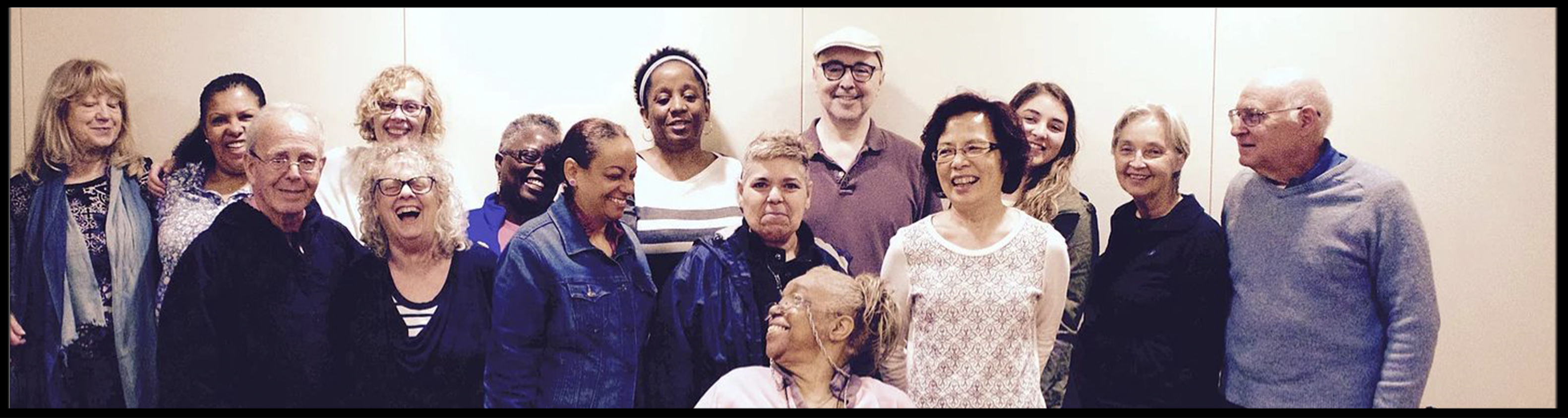

Our Mission
To provide no-charge speech and language therapy, resources and community in supportive group settings to anyone with aphasia.
The International Aphasia Movement (IAM) was started by Harvey N. Alter, together with Michael A. Young, Esq,, in 2005 after he experienced a stroke and exhausted his medical rehabilitation coverage. Mr. Alter established IAM to help others like himself who were still regaining their communication skills after a stroke or brain injury. Since its inception more than 550 aphasia survivors and co-survivors have participated in IAM programs.
.

Carlota Schoolman, Executive Director of the International Aphasia Movement
Finding Her Voice
Carlota Schoolman says aphasia opened up a new world for her.
by Annie Levy
What caused your aphasia, or the inability to speak or find words? I was reaching for a six-pack of tonic water on a top shelf in a supermarket in March 2009. When I removed the one I wanted, another one came flying off and hit me in the head.
When did you first have symptoms? Two days later, I felt “weird” and knew something was wrong. My husband asked me some basic questions, but when I tried to answer the words just didn’t come out. He called 911, and the ambulance personnel asked me the same questions. When I couldn’t answer, I was rushed to the hospital.
What happened at the hospital? I had a computed tomography scan, which revealed a collection of blood outside my brain. They told my husband it was a subdural hematoma and they had to operate immediately. I was diagnosed with aphasia and started language and speech therapy.
How was your language affected? A lot of people came to visit me, and I was told later I called everyone Melynda, who is a close friend. I had to relearn the alphabet. A speech pathologist came two or three days a week.
Did you continue therapy after that? Yes, I joined a program at Mount Sinai Hospital as an outpatient. I was there for two and a half years. I went four days a week, five hours a day. By that time, I was also attending programs at the International Aphasia Movement (IAM) once a week.
What are the IAM meetings like? First there’s a meeting with the entire group—people with different types of aphasia in a single circle. Then we break into small groups according to our level and the kind of aphasia we have. The smaller groups are run by speech and language therapists.
Now you’re the director of the IAM. How did that happen? When Harvey Alter founded IAM after his own stroke and subsequent aphasia, he instituted a policy that the director be someone with aphasia. Before he died last year, he asked me if I would assume that responsibility.
What have you learned about aphasia over the years? People are often told they’ll improve and then plateau. It’s not true. People continue to improve. It’s not that everyone who walks through the door at IAM leaves without their disability, but people learn to accept their limitations while being committed to improving.
What have you learned about aphasia over the years? People are often told they’ll improve and then plateau. It’s not true. People continue to improve. It’s not that everyone who walks through the door at IAM leaves without their disability, but people learn to accept their limitations while being committed to improving.
© 2016 American Academy of Neurology
.
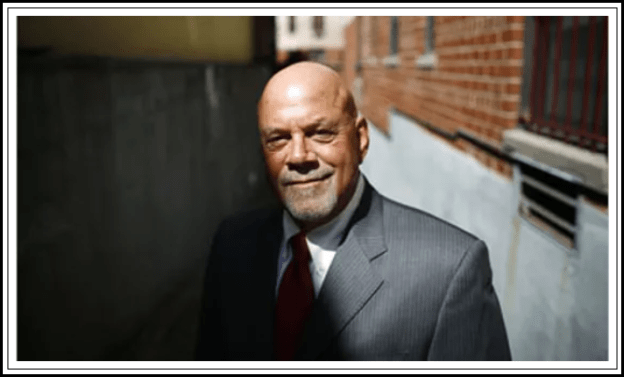
Harvey N. Alter,
Co-Founder of the International Aphasia Movement
International Aphasia Movement (IAM)
was co-founded by Harvey N. Alter and Michael A. Young, Esq. IAM has been providing speech and language therapy and support groups for co-survivors since 2005.
IAM is now directed by Carlota Schoolman.
.
Co-Survivors
When one person has aphasia, the lives of family members, friends, and caregivers change also.
Co-survivors meet regularly to support and encourage each other.
Board of Directors
Irene Burney, Co-Survivor
Tim Carosi, Aphasia Survivor
Evelyn Finn, Co-Survivor
Virginia Hill, CCC-SLP, President
Audrey Honneus, CCC-SLP, Secretary
Jonathan Kreuter, Aphasia Survivor
Darlene Monda, CCC-SLP
Dorothy E. Ross, CCC-SLP, Treasurer
Carlota Schoolman, Aphasia Survivor, Director
Meredith Straker Blackman, CCC-SLP
 iamaphasia