As an Amazon Associate, IAM earns from qualifying purchases. This page contains affiliate links, which means that IAM gets a commission if you decide to make a purchase through our links, at no cost to you.
Aphasia Book Club Selections

Death Comes to Marlow
(The Marlow Murder Club, 2)
A British locked-room mystery with fun characters!
Paid link to Death Comes to Marlow

Mr. Churchill’s Secretary
Maggie Hope Series Volume 1 of 11
It is 1940, and Maggie Hill, an Englishwoman who was raised by her aunt in Boston, goes to work at 10 Downing Street. There she finds more opportunity for danger than she ever dreamed of.
Paid Link to Mr. Churchill’s Secretary

Princess Elizabeth’s Spy
Maggie Hope Series Volume 2 of 11
Maggie Hope is a MI-5 spy during WWII assigned to be a tutor to Princess Elizabeth. Her initial disappointment with the job fades when she realizes that the job is more dangerous than she expected.
Paid Link to Princess Elizabeth’s Spy

His Majesty’s Hope
Maggie Hope Series Volume 3 of 11
Bombs are falling in London as Maggie Hope is assigned as part of a black ops to Nazi controlled Berlin. Family connections threaten to make her mission even more complicated.
Paid Link to His Majesty’s Hope

The Prime Minister’s Secret Agent
Maggie Hope Series Volume 4 of 11
Maggie Hope goes to western Scotland to recuperate from her time in Berlin, but there is no escape from danger in World War II Britain.
Paid Link to The Prime Minister’s Secret Agent

Mrs. Roosevelt’s Confidante
Maggie Hope Series Volume 5 of 11
Maggie Hope accompanies Winston Churchill to Washington DC on a mission to draw the United States into World War II. She is soon drawn into solving a mystery that could change the course of the war
Paid Link to Mrs. Roosevelt’s Confidant

The Queen’s Accomplice
Maggie Hope Series Volume 6 of 11
Back in London, Maggie Hope is recruited to help track down a serial killer. Can she escape being his next victim?
Paid Link to The Queen’s Accomplice

The Paris Spy
Maggie Hope Series Volume 7 of 11
In the days before the Allied Invasion of Europe, Maggie Hope is undercover in Paris. She is searching for a traitor, and for information vital to the success of D-Day.
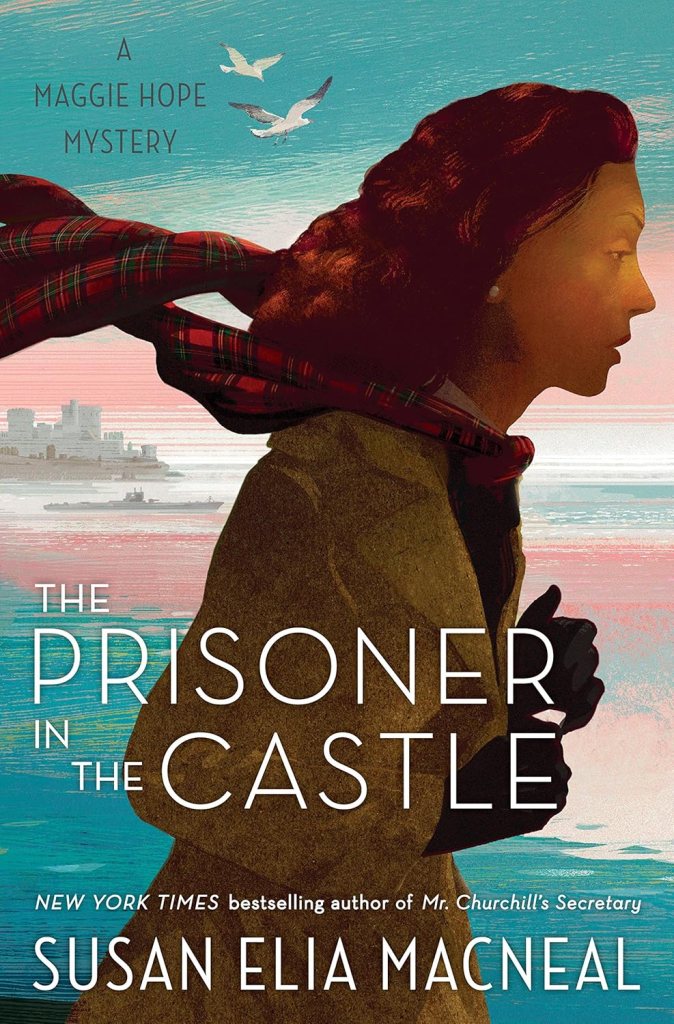
The Prisoner in the Castle
Maggie Hope Series Volume 8 of 11
Maggie Hope is imprisoned in Killoch Castle on a remote Scottish island because she knows too many secrets. She must fight for her life when her fellow prisoners start dropping dead.
Paid Link to The Prisoner in the Castle

The King’s Justice
Maggie Hope Series Volume 9 of 11
Late in World War 11, Maggie Hope is back in London. She is defusing bombs and struggling with PTSD. Against her will, she is drawn into investigating another serial killer.
Paid Link to The King’s Justice

The Hollywood Spy
Maggie Hope Series Volume 10 of 11
During late World War II, the war rages in Europe, and America closes in on Tokyo. At the request of an old flame, Maggie Hope travels to Hollywood to investigate the mysterious death of his fiancee.
Paid Link to The Hollywood Spy

The Last Hope
Maggie Hope Series Volume 11 of 11
Maggie Hope travels to Madrid late in World War II, charged with assassinating a nuclear physicist working for the Germans.
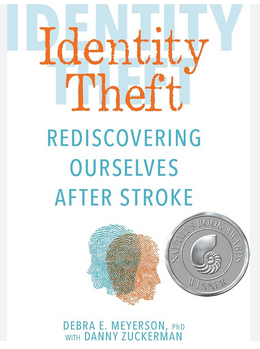
Identity Theft: Rediscovering Ourselves After Stroke (Paid Link)
by Debra E Meyerson, PhD, with Danny Zuckerman
This book is by an aphasia survivor who was a professor of organizational behavior at Stanford University. During her stroke recovery, she did not find many resources for the emotional aspects of the recovery journey. She wrote this book to help her fellow survivors.
This book was chosen by several IAM participants to read together in an informal book club.
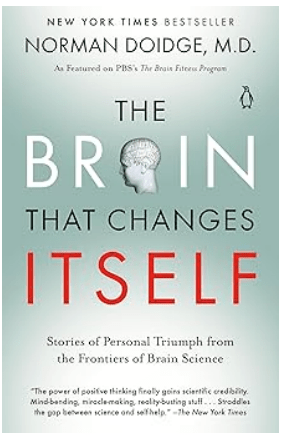
The Brain That Changes Itself: Stories of Personal Triumph
from the Frontiers of Brain Science (Paid Link)
by Norman Doidge, MD
For many years, scientists thought that the brain did not change after reaching adulthood. Recently, it has been discovered that the brain continues to rewire itself, and even create new neurons, through out life. This has been termed “neuroplasticity”. We are able to continue to learn, and to relearn, all our lives. This is true of people with brain injuries, and people who do not have brain injuries.
Human beings are also capable of making choices, and choosing which neural pathways that they want to strengthen, and which they will allow to weaken. So tat we all have the potential to shape our own lives.
Paid Link to The Brain That Changes Itself
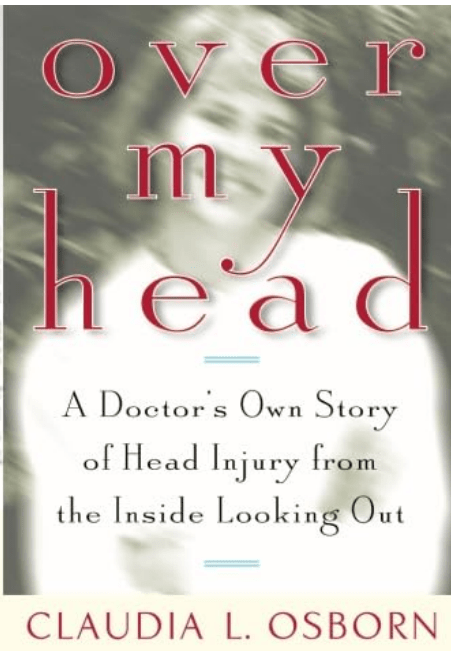
Over My Head: A Doctor’s Own Story of Head Injury
from the Inside Looking Out (Paid Link)
by Claudia L. Osborn
Claudia Osborn was a practicing physician at a busy hospital when she suffered a head injury after being thrown from her bicycle. At first, neither she nor her colleagues realized the extent of her resulting disabilities. She attempted to return to work, but it became apparent that she could not handle the job. She underwent many years of rehabilitation before creating a new life for herself.
This book gives an excellent account of the many ways that traumatic brain injury can affect functioning in everyday life. It also provides hope that, even if the old life is not regained, new ways of living are possible.
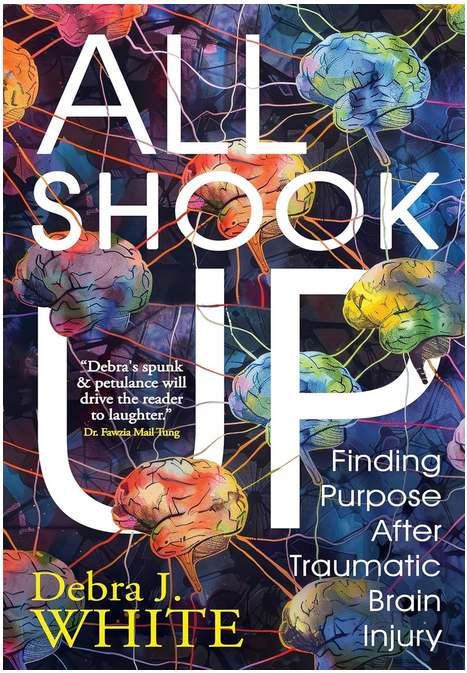
All Shook Up: Finding Purpose After Traumatic Brain Injury (paid link)
by Debra J White
This book was recommended by Virginia Hill. The author was health conscious and very physically active, when she was hit by a car while walking her rescue dogs. The accident left her with both cognitive and physical mobility problems. She did experience difficulty with language during her recovery, but eventually regained the ability to speak and write.
Debra White describes her accident, rehabilitation, and the changes that she made in her life as a result. She continued to volunteer with animal rescues, and found purpose in other new volunteer activities as well.
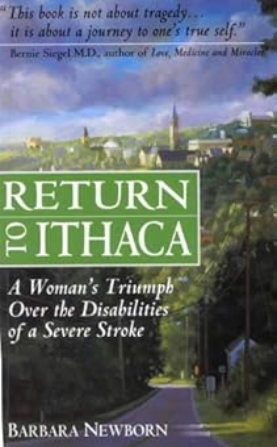
Return to Ithaca: A Woman’s Triumph Over the Disabilities of a Severe Stroke (paid link)
Barbara Newborn had just graduated at the age of 21 from Cornell University with a teaching degree when she suffered a stroke with severe aphasia. She was unable to enter her chosen career and her fiance broke up with her. After nine months of rehabilitation, she went back to Ithaca, where Cornell is located, and would spend the day in the student center, talking to whoever she could. Eventually, she created a new life for herself. Her story could be helpful to young people with aphasia who are trying to create their lives while dealing with aphasia.
As a speech language pathologist, this was a very important book for my learning. I drew the conclusion the most important part of aphasia recovery is talking and communicating. You do not learn to walk again by sitting on a couch – and you do not regain speech by remaining silent. The other lesson I took away from it was the commonalities of people with aphasia and people who are learning a second language. Both are cognitively intact, but have difficulty communicating in their first or second language.
 iamaphasia